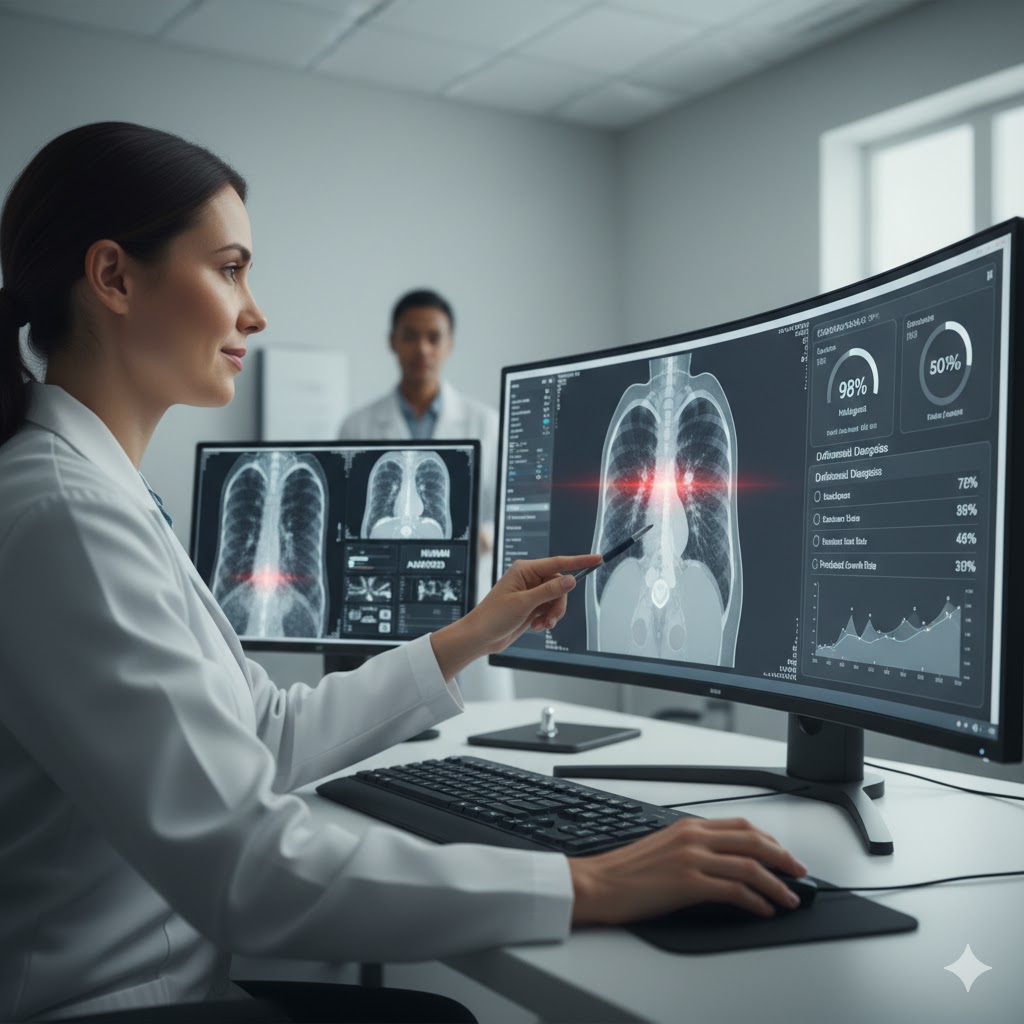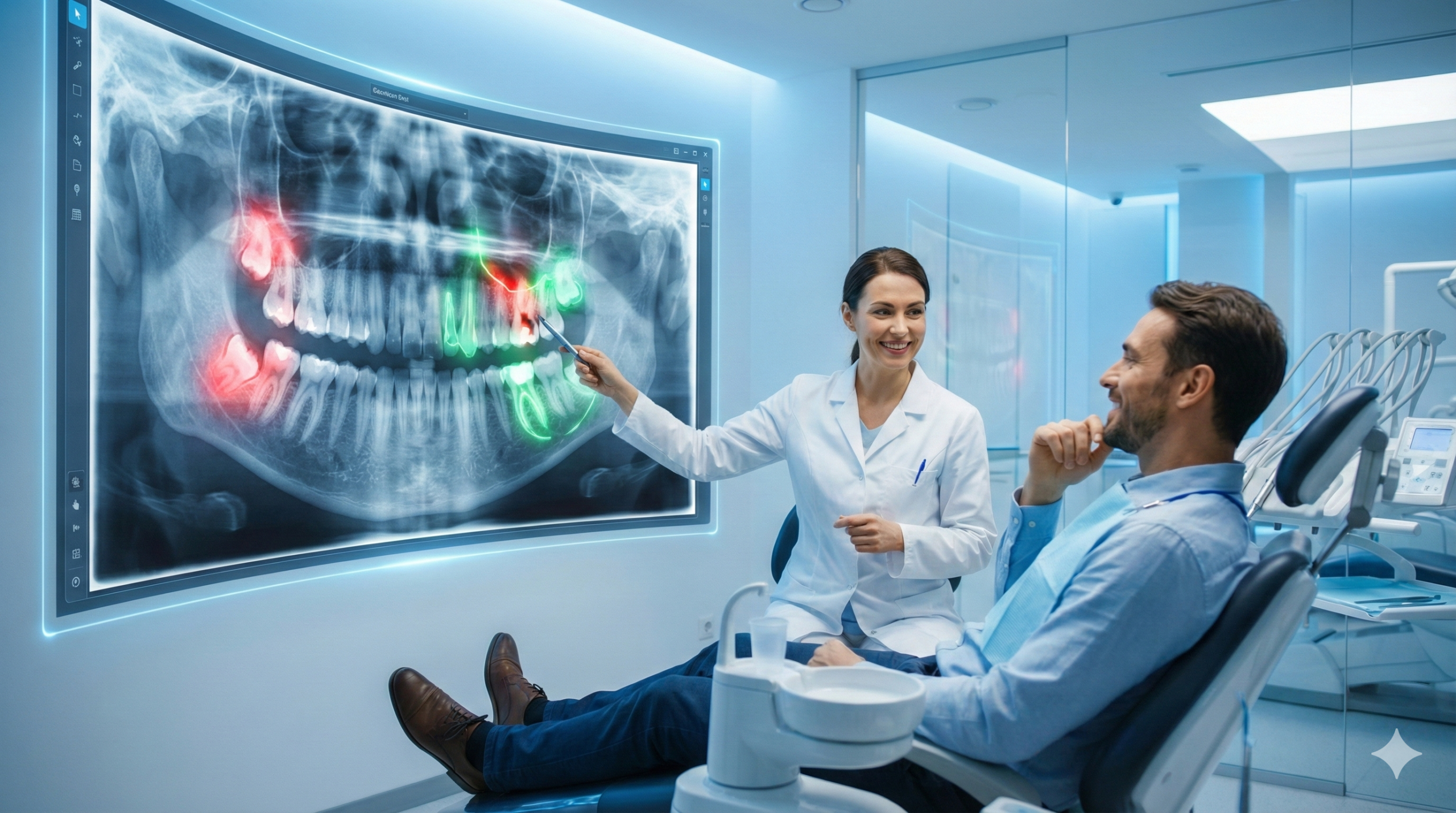

You probably entered medicine to help people. You wanted to heal the sick and listen to their stories. You did not sign up to become a data entry clerk. Yet that is exactly what modern healthcare demands of you. You spend your days staring at a screen. You click endless boxes. You type until your fingers ache. The patient sits just a few feet away. But they feel miles apart because the computer is like a wall between you. This is the reality of the documentation burden. It leads to burnout. It causes you to miss dinner with your family because you are stuck doing “pajama time” charting at night. It drains the joy out of your work.
There is a way out of this trap. A new wave of technology called AI medical scribes has arrived to help. These tools listen to your conversations. They write your notes for you. They let you put down the mouse and look your patient in the eye again. This report will guide you through everything you need to know about this revolution. We will explore the best tools on the market. We will show you how they work. We will even look at the future of healthcare where AI acts as your partner rather than just a tool.
Key Takeaways
- You can cut your documentation time in half. Doctors who use ambient AI scribes reduce the time they spend on notes by nearly 50 percent. This directly lowers the amount of work you do after hours.1
- Burnout rates drop significantly. Studies show that using these tools can lower feelings of burnout from over 51 percent to around 38 percent in just one month. You feel less mental strain and more focus.1
- The market has a tool for everyone. Large hospitals often use enterprise tools like Nuance DAX or Abridge. Small private practices might prefer affordable apps like Freed or Nabla. Specialists have options like DeepScribe.3
- You must still be the pilot. AI is smart but it can make mistakes called hallucinations. You always need to review the note to ensure it is accurate before you sign it.5
- The future is about more than just notes. By 2026 and beyond we will see “Agentic AI” that helps you coordinate care and predict patient needs before they happen.7
What is the difference between an AI scribe and ambient clinical intelligence?
An AI Scribe typically focuses on turning speech into text like a smart dictation tool. Ambient Clinical Intelligence (ACI) is much smarter because it listens to the whole room to understand context and creates structured notes automatically.
Think of it like the difference between a stenographer and a highly trained medical resident. A stenographer writes down exactly what you say. If you dictate a letter they will type it word for word. This is what a basic AI scribe or dictation tool does. It is very useful if you like to talk through your notes at the end of a visit. But it still requires you to tell it what to do. You have to say “period” or “new paragraph” or specifically dictate the physical exam findings.
Ambient Clinical Intelligence acts more like that smart resident. It stands invisibly in the room with you. It listens to the natural conversation between you and your patient. You do not need to give it commands. You do not need to say “hey computer write this down.” You just talk to your patient. You ask about their symptoms. You discuss their medication history. You joke about the weather.
The ACI is smart enough to know the difference. It filters out the small talk about the weather. It picks up the clinical facts about the medication. It understands that when the patient says “my stomach hurts after I eat,” that belongs in the History of Present Illness (HPI). It organizes all this messy conversation into a perfect medical note. It fills out the SOAP format (Subjective, Objective, Assessment, Plan) for you.9
This technology uses advanced Generative AI. This is the same brain behind tools like ChatGPT. But it is specially trained on medical language. It knows that “qd” means once a day. It knows that “metformin” is for diabetes. It weaves these facts into a professional narrative. The goal is to make the technology disappear. You should not have to think about the computer at all. You just practice medicine. The ACI handles the rest.10
Real-world data backs this up. Clinicians using these ambient tools report that they feel like they have a “well-supervised medical scribe working behind the scenes”.12 This allows you to focus completely on the person in front of you. You can pick up on non-verbal cues you might have missed while typing. You can build trust. And when the visit is over you simply glance at the computer. The note is already there waiting for your review. It is like magic but it is really just very advanced math and language processing working to make your life easier.
Why are doctors feeling so burned out right now?
Doctors are burned out because they spend two hours on administrative tasks for every one hour they spend with patients.
This statistic is staggering. It comes from a study at UCLA and it highlights the root cause of the crisis.13 You did not go to medical school to become a professional typist. But the Electronic Health Record (EHR) has turned you into one. The intention of the EHR was good. It was meant to keep records safe and organized. It was meant to improve billing and tracking. But it failed to account for the human cost.
The cognitive load of this documentation is immense. Cognitive load refers to the amount of mental effort being used in your working memory. When you are trying to listen to a patient describing their chest pain while simultaneously navigating a complex menu on a screen your brain is splitting its attention. You are multitasking. Humans are actually very bad at multitasking. This constant switching of focus drains your mental energy. By the end of the day you are exhausted. Not because you treated difficult diseases but because you fought with a computer interface all day.1
This exhaustion follows you home. This is what we call “pajama time.” This is the time you spend finishing your charts at night or on weekends. You might be sitting on your couch with your family but your mind is still at the clinic. You are logging in to finish those last five notes. This blurs the line between work and rest. It prevents you from recovering. It leads to high rates of depression and career dissatisfaction among physicians.
The impact is not just on you. It is on the healthcare system as a whole. When doctors burn out they cut back their hours. Or they leave the profession entirely. This creates a shortage of providers. It makes it harder for patients to get appointments. It costs health systems a fortune to recruit new doctors to replace the ones who left. Estimates suggest it costs between $800,000 and $1.3 million to replace a single physician.14
So the problem is clear. The administrative burden is unsustainable. We need a solution that lifts this weight off your shoulders. We need a tool that gives you back your time and your mental space. This is where AI comes in. It is not just a fancy gadget. It is a lifeline for a profession that is drowning in paperwork.
Which AI scribe is best for a large hospital system?
Nuance DAX Copilot and Abridge are the leading choices for large health systems because they integrate deeply with Epic and offer high security.
Large organizations like hospitals have very specific needs. They cannot just download an app from the store. They need tools that are secure. They need tools that follow strict HIPAA rules. They need tools that talk directly to their massive EHR systems. In this “Enterprise” tier of the market two names stand out above the rest.
Nuance DAX Copilot
Think of Nuance as the established giant. Nuance was bought by Microsoft. This gives it incredible resources and security infrastructure. Their product is called the Dragon Ambient eXperience (DAX) Copilot. It is the gold standard for many large academic medical centers.
Why do big hospitals love it?
- Deep Integration: It works seamlessly inside Epic. Epic is the EHR used by most large US health systems. DAX is not a separate window you have to toggle to. It lives right inside the chart.
- Microsoft Power: Because it is owned by Microsoft it uses the same secure cloud technology that many hospitals already trust. It also uses the latest AI models from OpenAI (the makers of ChatGPT) to improve its accuracy.15
- Scale: It is built to handle thousands of doctors at once. It has the management tools that hospital IT directors need to control who has access and how it is used.
However it is expensive. The cost can be around $444 to $600 per provider per month.16 This is a big investment. But for a hospital system that wants the most robust and integrated solution it is often the default choice.
Abridge
Abridge is the challenger that is taking the market by storm. It has positioned itself as the most “physician-friendly” option. It is also deeply integrated with Epic. In fact it was the first partner in Epic’s “Partnership and Pals” program. This gives it a level of access that is very similar to Nuance.
What makes Abridge special?
- Trust Layer: This is their “killer feature.” Doctors are often afraid that AI will make things up (hallucinate). Abridge solves this by linking every part of the note to the audio. If the note says “Patient has had a fever for three days,” you can click on that sentence. The system will play back the exact recording of the patient saying “I’ve been burning up since Tuesday.” This builds immense trust. You can verify the note in seconds.4
- Speed: Users report that Abridge is very fast. It generates notes almost instantly. This helps you finish your charting right after the visit.
- Adoption: It is being used by major systems like Yale New Haven Health and UChicago Medicine. Doctors there have reported huge drops in burnout.17
For a large hospital the choice often comes down to these two. Nuance offers the stability of Microsoft. Abridge offers a user experience that doctors often prefer because of its transparency and speed. Both are excellent choices that define the “Enterprise” tier of the market.
What options exist for small private practices?
Freed and Nabla are excellent choices for private practices because they are affordable and easy to set up without an IT team.
If you run a small clinic you do not have a massive IT department. You cannot spend months integrating software. You need something that works now. You need something affordable. The market has responded with a wave of “agile” AI scribes that are perfect for you.
Freed
Freed is a favorite among independent family doctors. It is designed to be “dead simple.”
- How it works: You literally just open the website or app. You press a button to start listening. It writes the note. Then you copy and paste it into your EHR.
- Why it wins: It costs about $99 a month.19 This is much cheaper than the enterprise tools. It requires zero setup. You can start using it five minutes from now.
- The Vibe: It feels like a tool made for doctors by people who understand the hustle of a small practice. It learns your style over time. If you correct it once it tries to remember that preference for next time.3
Nabla
Nabla is another strong contender in this space. It is known for being very fast.
- Specialty: It works exceptionally well for telehealth. If you see patients over video Nabla can run in the background and capture everything perfectly.
- Business Model: It often has a free tier or a very flexible pricing model. This makes it low risk to try.
- Features: It generates a structured note in seconds. It focuses on clarity and speed. It might not have all the bells and whistles of Nuance but it does the main job—writing the note—extremely well.3
SteerNotes
If you are a functional medicine doctor or someone who has very long and complex visits SteerNotes might be for you.
- Customization: It has a “Template Creator Studio.” This lets you build your own charting structure. If you ask very specific questions about diet or lifestyle that standard notes miss SteerNotes allows you to build a framework for that.
- Target: It is designed for clinics that need this level of control. It ensures the AI follows your logic rather than a generic standard.3
These tools prove that you do not need to work at a giant hospital to benefit from AI. You can have an advanced digital assistant in your pocket for the price of a daily coffee.
Are there tools built for specialists like cardiologists?
Yes. DeepScribe and Ambience Healthcare build specialized models for complex fields like oncology and cardiology.
Generic AI is great for general practice. But if you are a specialist you speak a different language. A cardiologist talks about “ejection fractions” and “mitral valve regurgitation.” An oncologist tracks “tumor markers” and complex chemotherapy cycles. A generic tool might get confused by this. It might simplify things too much.
DeepScribe
DeepScribe is the leader for specialists. They have trained their AI specifically on millions of specialty conversations.
- Cardiology: It knows exactly what a cardiology note should look like. It creates a specific “Cardiac History” section. It pulls in family history of heart disease automatically. It understands the nuance of cardiac symptoms.
- Oncology: Cancer care is longitudinal. It happens over a long time. DeepScribe helps summarize the patient’s journey. It captures the details of their regimen.
- Coding: This is crucial for specialists. DeepScribe automates the complex medical coding (ICD-10) that specialists need for billing. It suggests the right codes based on the conversation. This ensures you get paid for the complex work you do.20
Ambience Healthcare
Ambience is another heavy hitter in the specialty space.
- Scope: They have a very wide range of specialty models. From psychiatry to orthopedics they have tuned their engine for each one.
- Workflow: They focus on the whole workflow. This includes “CDI” or Clinical Documentation Improvement. The AI nudges you if you missed a detail that is needed for accurate billing. It acts like a billing expert sitting next to you.23
If you are a specialist accuracy is everything. You cannot afford a generic summary. You need a tool that speaks your language. These vendors have built exactly that.
How accurate are these tools really?
These tools are highly accurate but they can occasionally “hallucinate” false information so you must always review the note.
Trust is the foundation of medicine. You need to trust that your chart is accurate. So can you trust an AI? The answer is “mostly yes but verify.”
The “Hallucination” Problem
Generative AI works by predicting the next word in a sentence. Sometimes it gets creative. It might “hallucinate.” This means it makes something up that sounds plausible but never happened.
- Example: A doctor might say “We need to schedule a prostate exam for next year.” The AI might hear “prostate exam” and write “Prostate exam performed: Normal.” That is a dangerous error.
- Example: A discussion about a patient’s kids having “hand foot and mouth disease” could be miswritten as the patient having that diagnosis.5
Studies on general AI have shown error rates that can be significant. In legal AI tools hallucination rates were found to be between 17 percent and 33 percent.6 While medical scribes are tuned to be much more conservative and accurate than that the risk is never zero.
The Human in the Loop
This is why we say the AI is a “copilot” not an autopilot. You are the pilot. You must read the note.
- Workflow: You do the visit. The AI writes the draft. You spend one or two minutes reviewing it. You fix any small errors. Then you sign it.
- Safety: This review process is your safety net. It is still much faster than typing the whole note from scratch. Most doctors find they only need to make minor edits.
Privacy and Consent
Patients also worry about accuracy and privacy. Surveys show that about 19 percent of patients have concerns. They worry about who is listening. They worry about data security.25
- Best Practice: You should always ask for consent. Say “I use an AI tool to help with my notes so I can look at you instead of the computer. Is it okay if it listens to us?” Most patients say yes enthusiastically because they want your attention.
- Data Security: Vendors like Nuance and Abridge do not store the audio permanently in a way that can be linked to the patient. UChicago for instance deletes recordings within a week. The data is used to write the note and then it is gone.12

What measurable results can I expect?
You can expect to save about 10 to 14 minutes per day and reduce your after-hours work significantly.
This might not sound like a lot at first glance. Ten minutes? Is that it? But you have to look deeper to see the real impact.
The “Pajama Time” Reduction
That 10 minutes usually comes directly out of your personal time. A study at Yale found that doctors saved about 0.9 hours (54 minutes) per week on after-hours documentation. That is an hour of your life back every week. That is an hour you can spend with your kids or reading a book or just sleeping.1
Burnout Statistics
The reduction in burnout is the most dramatic statistic.
- Before AI: 51.9 percent of clinicians reported feeling burned out.
- After AI: That number dropped to 38.8 percent.
That is a massive shift in just one month. The “cognitive task load” dropped significantly. This means your brain is less tired. You have more energy left at the end of the day.1
Patient Satisfaction
Patients notice the difference too. They do not see you typing. They see you listening.
- Undivided Attention: Clinicians reported a 2-point jump (on a 10-point scale) in their ability to give patients undivided attention.
- Clarity: Doctors felt that patients understood the care plan better. Why? Because the doctor had time to explain it properly instead of rushing to the computer.1
Financial ROI
For the clinic there is also a money argument.
- Volume: Some clinics find they can see one extra patient a day because of the time saved.
- Retention: If doctors are happier they stay. Saving just one doctor from quitting saves the system a million dollars in recruitment costs.
- Coding: Tools like Ambience and DeepScribe improve billing accuracy. They ensure you capture every comorbidity (HCC coding). This can increase the revenue for the practice significantly.14
| Metric | Before AI Scribe | After AI Scribe | Impact |
| Burnout Rate | 51.9% | 38.8% | -13.1% (Big Drop) |
| After-Hours Work | High | Reduced by ~1 hour/week | More Free Time |
| Focus on Patient | Distracted | Undivided Attention | Better Care |
| Note Quality | Variable | Standardized & Detailed | Better Records |
What does the future look like in 2026 and beyond?
In the future AI will evolve from a passive scribe into an active “Agent” that coordinates care and predicts health issues.
We are just in “Phase 1” right now. Phase 1 is documentation. Phase 2 is “Agentic AI.”
The Rise of Agents
By 2026 AI will stop being just a listener. It will start being a doer.
Imagine this scenario. You see a patient with heart failure. You say “We need to get an echo and start Lasix.”
- The Scribe (Today): Writes “Plan: Echocardiogram ordered. Start Lasix.”
- The Agent (Future): It writes the note. But then it also opens the order entry screen. It cues up the echocardiogram order. It checks the patient’s insurance to see if a prior authorization is needed. It starts filling out that form. It sends the prescription to the pharmacy. It even drafts a referral letter to the cardiologist for you to sign.
This is the “Agent.” It takes action. It removes the friction from all the logistics of healthcare.7
Predictive Medicine
The AI is listening to millions of conversations. It will start to notice patterns that humans miss.
- Early Warning: It might notice that a patient’s speech pattern has changed slightly over the last three visits. This could be an early sign of dementia or neurological decline. It will flag this for you.
- Digital Twins: We will see the rise of “Digital Twins.” This is a virtual model of your patient. You can test treatments on the twin to see what might work best before you try it on the real person. The data from your conversations helps build this model.8
A New Care Team
We might see robots or AI kiosks handling the “intake” part of the visit. They could take the history before you even walk in the room. This allows you to operate at the “top of your license.” You only do the complex medical decision making. The AI handles the data gathering and the logistics. This could solve the shortage of healthcare workers. It allows fewer human doctors to care for more patients without burning out.7
Conclusion
We are standing at a crossroads in healthcare. For the last twenty years technology has been a burden. It has added work to your plate. It has put a screen between you and the people you want to help. But this new wave of AI is different. It is technology that gets out of the way.
It is invisible. It is helpful. It gives you back the most precious resource you have: your time. Whether you are a surgeon at a massive hospital or a family doctor in a small town there is a tool ready for you today. You can start small with an app on your phone. You can see what it feels like to finish your notes before the patient even leaves the room.
The tools are not perfect. They require your supervision. They require you to be the pilot. But they are a vast improvement over the status quo. They offer a path back to the “Joy of Medicine.” They allow you to be the doctor you always wanted to be. One who listens. One who connects. One who heals.
So here is a question for you to consider: If you could get back one hour of your day every single day what would you do with it?
Works cited
- Use of Ambient AI Scribes to Reduce Administrative Burden and …, accessed January 13, 2026, https://pmc.ncbi.nlm.nih.gov/articles/PMC12492056/
- Less Typing, More Talking: AI Reshapes Clinical Workflow, accessed January 13, 2026, https://consultqd.clevelandclinic.org/less-typing-more-talking-how-ambient-ai-is-reshaping-clinical-workflow-at-cleveland-clinic
- 7 Best AI Medical Scribes for 2026 | Full Comparison Guide – Steer Health, accessed January 13, 2026, https://steerhealth.io/blog/7-best-ai-medical-scribes-for-a-strong-start-to-2026
- 9 Best AI Scribes for Clinicians [2026]: Comparisons, Features …, accessed January 13, 2026, https://www.getfreed.ai/resources/best-ai-scribes
- AI scribe saves doctors an hour at the keyboard every day | American Medical Association, accessed January 13, 2026, https://www.ama-assn.org/practice-management/digital-health/ai-scribe-saves-doctors-hour-keyboard-every-day
- Hallucination‐Free? Assessing the Reliability of Leading AI Legal Research Tools – Daniel E. Ho, accessed January 13, 2026, https://dho.stanford.edu/wp-content/uploads/Legal_RAG_Hallucinations.pdf
- How AI Will Shape the Future of Health Care In 2026 – SullivanCotter, accessed January 13, 2026, https://sullivancotter.com/ai-and-the-future-of-health-care/
- How AI Agents and Tech Will Transform Health Care in 2026 – Boston Consulting Group, accessed January 13, 2026, https://www.bcg.com/publications/2026/how-ai-agents-will-transform-health-care
- accessed January 13, 2026, https://www.commure.com/blog/ambient-ai-vs-ai-scribe-whats-the-difference#:~:text=Ambient%20AI%20in%20healthcare%20is,support%20the%20entire%20clinical%20workflow.
- Ambient AI vs AI Scribe: What’s the Difference? – Blog – Commure, accessed January 13, 2026, https://www.commure.com/blog/ambient-ai-vs-ai-scribe-whats-the-difference
- AI scribes for clinicians: How ambient listening in medicine works and future AI use case, accessed January 13, 2026, https://www.youtube.com/watch?v=0jCVSTZGnjE
- What to know about AI ambient clinical documentation – UChicago Medicine, accessed January 13, 2026, https://www.uchicagomedicine.org/forefront/patient-care-articles/ai-ambient-clinical-documentation-what-to-know
- UCLA study finds AI scribes may reduce documentation time and improve physician well-being, accessed January 13, 2026, https://www.uclahealth.org/news/release/ucla-study-finds-ai-scribes-may-reduce-documentation-time
- AI Scribes Reduce Physician Burnout and Return Focus to the Patient, accessed January 13, 2026, https://medicine.yale.edu/news-article/ai-scribes-reduce-physician-burnout-return-focus-to-the-patient/
- Best AI Medical Scribe: 5 Top Solutions for 2026 – Ekipa AI, accessed January 13, 2026, https://www.ekipa.ai/ekipa-labs/best-ai-medical-scribe
- Best AI Medical Scribes of 2026 – OmniMD, accessed January 13, 2026, https://omnimd.com/blog/best-medical-ai-scribes/
- Abridge vs Ambience vs Freed – Sacra, accessed January 13, 2026, https://sacra.com/research/abridge-vs-ambience-vs-freed/
- AI notetakers reduce doctor burnout, Yale study finds – Yale Daily News, accessed January 13, 2026, https://yaledailynews.com/blog/2025/11/18/ai-notetakers-reduce-doctor-burnout-yale-study-finds/
- I tried all the AI medical scribes so you don’t have to – my honest review : r/FamilyMedicine, accessed January 13, 2026, https://www.reddit.com/r/FamilyMedicine/comments/1lokist/i_tried_all_the_ai_medical_scribes_so_you_dont/
- DeepScribe | AI Medical Scribe for Cardiology, accessed January 13, 2026, https://www.deepscribe.ai/specialties/cardiology
- The Best AI Medical Scribes in Healthcare 2025 – DeepScribe AI, accessed January 13, 2026, https://www.deepscribe.ai/resources/best-ai-medical-scribes
- CardioOne Partners With DeepScribe to Bring Cardiology-specific Ambient AI to Practices, accessed January 13, 2026, https://www.deepscribe.ai/resources/cardioone-partners-with-deepscribe-to-bring-cardiology-specific-ambient-ai-to-practices
- Clinical AI Platform vs Abridge – AVIA Marketplace, accessed January 13, 2026, https://marketplace.aviahealth.com/compare/63742/63747
- Abridge vs Suki vs Ambience: Best AI Scribe 2025? – Dr7.ai, accessed January 13, 2026, https://dr7.ai/blog/health/abridge-vs-suki-vs-ambience-best-ai-scribe-2025/
- Exploring how patients feel about AI transcription – UC Davis Health, accessed January 13, 2026, https://health.ucdavis.edu/news/headlines/exploring-how-patients-feel-about-ai-transcription/2025/12
- AI scribes can improve workflow but medicolegal concerns remain – AAP Publications, accessed January 13, 2026, https://publications.aap.org/aapnews/news/32224/AI-scribes-can-improve-workflow-but-medicolegal
- Top 10 Generative AI Use Cases in Healthcare 2025 – Creole Studios, accessed January 13, 2026, https://www.creolestudios.com/generative-ai-in-healthcare-use-cases/
- What to expect in US healthcare in 2026 and beyond, accessed January 13, 2026, https://www.mckinsey.com/industries/healthcare/our-insights/what-to-expect-in-us-healthcare