
Introduction
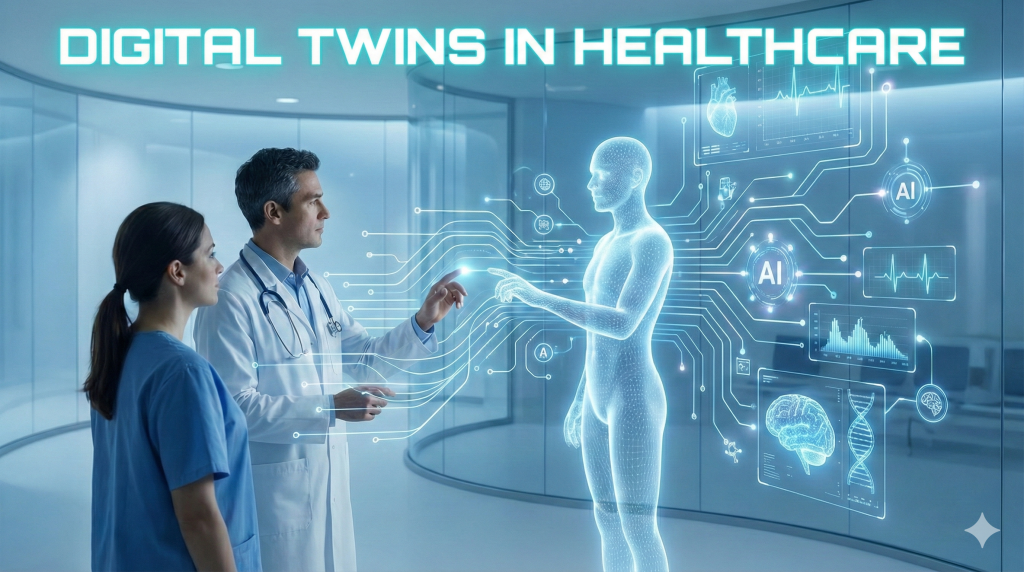
Digital Twins in Healthcare
Healthcare today often feels like a guessing game where the stakes are incredibly high. You or your loved ones might wait weeks for a diagnosis or try three different medications before finding one that works. This trial and error approach is slow and expensive. It is also dangerous. But imagine if doctors could test a surgery on a virtual copy of your body before they ever touched you. Imagine if a hospital knew you were getting sick before you even felt a symptom. This is not science fiction anymore. It is happening right now through a technology called the Digital Twin. We are going to explore how this tool fixes our broken healthcare system and saves lives.
Key Takeaways
- It Is Not Just a Simulation: A digital twin is a virtual copy that stays connected to the real person or hospital in real time. It changes instantly when the real world changes.1
- Virtual Surgery is Real: Doctors at Duke University are already using digital twins of arteries to practice placing stents. This helps them choose the perfect size without invasive risks.3
- Hospitals Are Running Better: Systems like the GE Command Center use twins to predict bed shortages days in advance. This has cut patient wait times and saved millions of dollars.4
- The Roadmap Has 4 Steps: You cannot just buy a digital twin. You must follow a maturity path that starts with basic data collection and ends with AI that can make its own decisions.6
- Your Privacy Matters: This technology raises big questions about who owns your data. We need new rules to stop insurance companies from using your digital twin against you.7
What is a digital twin in healthcare?
A digital twin is a dynamic virtual model of a physical thing like a patient or an organ that uses real time data to mirror the real world. It is different from a regular computer program because it has a constant two way connection with the object it copies.1
The Mirror Metaphor
Think of it like a smart mirror. A photograph captures how you looked at one specific moment in the past. It is static and does not change. A digital twin is like looking in a mirror. If you raise your hand the reflection raises its hand instantly. If you get a fever the digital twin shows that temperature spike immediately.
This is the most important distinction to understand. Traditional computer simulations are like that photograph. They use old data to guess what might happen. A digital twin uses live data to show you exactly what is happening right now. It evolves as you evolve.2
The Three Types of Medical Twins
We see three main categories of twins emerging in the medical field today.
1. The Asset Twin
This is a digital copy of a machine. Hospitals are filled with expensive equipment like MRI scanners and ventilators. An asset twin monitors the health of these machines. It might notice that a fan inside an MRI is vibrating too much. It can tell the maintenance team to fix it before it breaks completely. This prevents cancelled appointments and lost revenue.1
2. The Process Twin
This models a system rather than a thing. It looks at the flow of the entire hospital. It tracks patients entering the emergency room and nurses moving between wards. It helps administrators see bottlenecks. For instance it might show that patients are waiting too long for blood tests because the lab is understaffed on Tuesdays.10
3. The Patient Twin
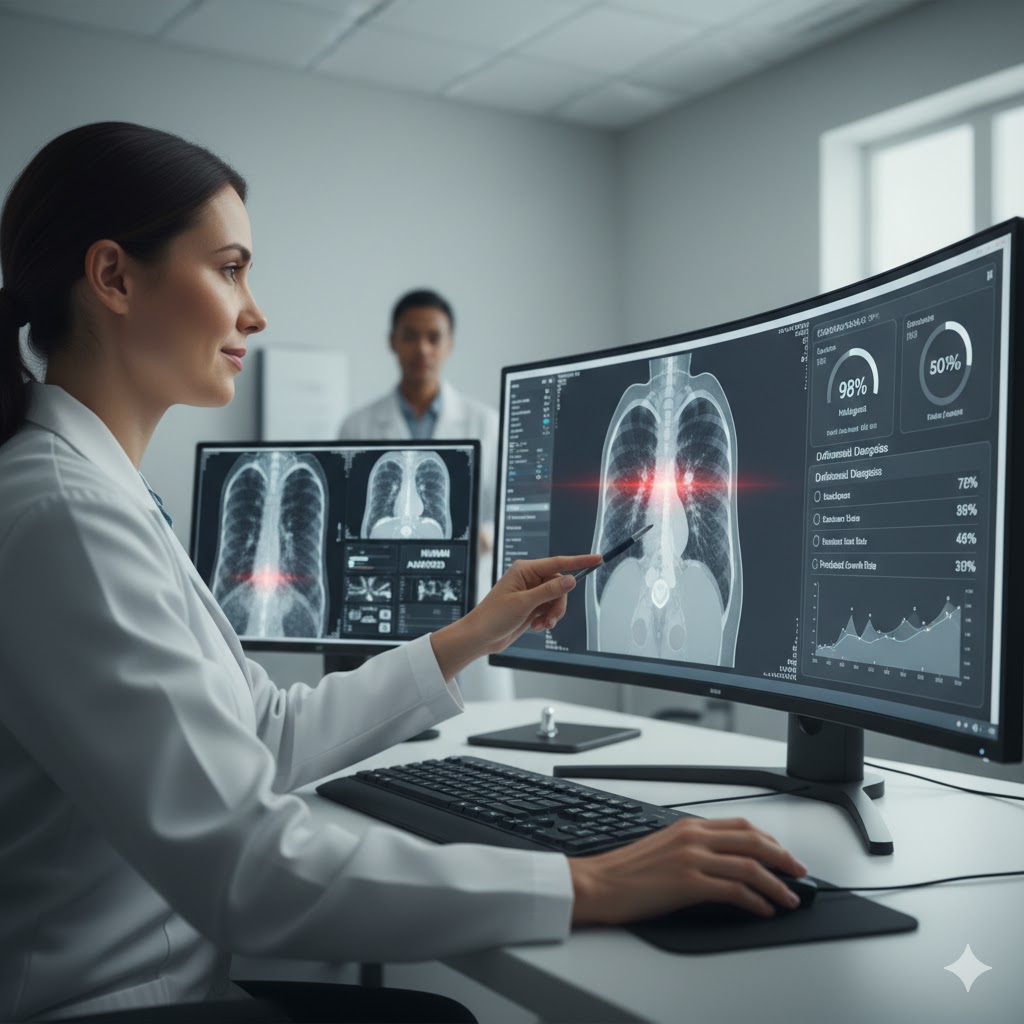
This is the “Holy Grail” of the industry. It is a virtual replica of a human being. It can be a twin of a single organ like a heart or a twin of the whole body. Doctors use these to test drugs and surgeries. We are seeing major progress here with things like the “Charak DT Platform” which is creating digital twins of human lungs to test diseases.11
Real World Example: The Connected Light Bulb
To understand the concept simply look at a smart light bulb. A “partial” digital twin of that bulb tracks just two things. It tracks if the light is on or off. It tracks how much power it uses. Even this simple data lets you make decisions. You can see if you left the lights on when you left the house. Now imagine scaling that up to a human heart with thousands of data points. That is the power we are dealing with.12
How does this technology actually work?
The system works by using sensors to collect data from the real world and sending it to a computer brain that uses AI to predict the future. This creates a loop where the physical object updates the digital model and the digital model gives advice to improve the physical object.13
The Four Pillars of the System
You cannot have a digital twin without these four components working together.
1. The Sensors (The Eyes and Ears)
The system needs to “see” the patient. We use sensors to do this. For a machine this might be a thermometer inside a motor. For a patient this includes wearable devices like Apple Watches that track heart rate. It also includes medical scans like MRIs and CTs. It even includes genetic data. All of these inputs act as the senses for the digital twin.1
2. The Data Pipeline (The Nerves)
The information from the sensors needs to travel to the computer. This happens through a data pipeline. This is often done using the cloud. The connection must be fast and secure. If a patient’s heart stops the digital twin needs to know instantly. It cannot wait for a daily update.13
3. The Analytics Engine (The Brain)
Once the data arrives a powerful computer processes it. This is where Artificial Intelligence (AI) and Machine Learning (ML) come in. The computer compares the live data to historical patterns. It uses rules of physics and biology to understand what it is seeing. For example it uses the laws of fluid dynamics to simulate how blood moves through a vessel.3
4. The User Dashboard (The Voice)
Finally the twin needs to talk to the doctor. It presents the information on a screen or a tablet. It might show a 3D model of the heart or a graph of hospital bed capacity. This allows the human expert to make a better decision. The loop closes when the doctor acts on that advice.15
Think of it like a GPS
When you use Google Maps you are using a type of digital twin. The app (the twin) knows where your car (the physical asset) is because of GPS sensors. It knows where the traffic is because of data from other cars. It uses an algorithm to predict your arrival time. If there is an accident it suggests a new route. You then turn the steering wheel based on that advice. Healthcare twins do the exact same thing but for your body instead of your commute.
Why do we need this right now?
We need digital twins because healthcare is drowning in data yet we are still treating patients based on averages instead of their unique needs. Hospitals generate massive amounts of information that is currently going to waste while costs continue to skyrocket.3
The Data Explosion
We are creating more medical data than humans can handle. Health data makes up about 30% of all the data on Earth. A single hospital produces 50 petabytes of data every year. That is an unimaginable amount of information. Yet 97% of that data is never used to improve patient care. It just sits in storage. Digital twins unlock this data. They turn raw numbers into actionable insights that save lives.3
The Cost of Trial and Error
Medicine today is often reactive. You get sick and then you go to the doctor. The doctor prescribes a pill based on what works for the “average” person. But you are not average. You might have a genetic quirk that makes that pill toxic. So you get sicker. You try a different pill. This trial and error process hurts patients and costs billions. Digital twins allow us to test the pill on your virtual twin first. If the twin gets sick we know not to give you that medicine.17
The Aging Population
We have more older adults than ever before. This means more chronic diseases and more demand on hospitals. We cannot simply build enough new hospitals to keep up. We have to make the existing hospitals more efficient. Digital twins help us squeeze more value out of the resources we already have. They help us treat patients at home using remote monitoring twins so they do not have to take up a hospital bed.19
How are hospitals using digital twins today?
Hospitals use digital twins to function like air traffic control centers that predict bottlenecks and manage patient flow to reduce waiting times. This operational use is one of the most mature areas of the technology and is already saving millions of dollars.10
The GE Command Center
GE HealthCare has built “Command Center” twins for hospitals around the world. These are rooms filled with screens that look like NASA mission control. They pull data from every department in the hospital. They track every bed and every ambulance and every surgery schedule.10
Real World Example: The Queen’s Health Systems
This hospital system in Hawaii faced a crisis. They had too many patients and not enough beds. They implemented a digital twin command center. The results were incredible.
- They reduced the average length of stay by 0.7 days. That sounds small but it is huge. It is like adding 30 free beds to the hospital without building a single new room.
- They cut emergency room boarding by 64%. “Boarding” is when you are stuck in the ER hallway because there is no room upstairs.
- They saved an estimated $20 million in the first year alone because they could treat more patients efficiently.4
Predicting the Future
These systems do not just show what is happening now. They predict what will happen next. The twin might say “Warning: In 4 hours the cardiac unit will be full.”
This gives the nurses time to prepare. They might discharge a healthy patient an hour early to make room. They might call in extra staff. This moves the hospital from a state of chaos to a state of control.10
Duke Health Success Story
Duke Health also used this technology. They saw a 66% drop in the time it took to assign a bed to a patient. They also saw a 6% boost in productivity. By predicting staffing needs two weeks in advance they reduced their reliance on expensive temporary nurses by 50%.5
Designing Better Hospitals
You can also use a twin before you even build the hospital. Architects use digital twins to simulate foot traffic. They might find that a nurse has to walk 2 miles every shift because the supply closet is in the wrong spot. They can move the closet in the digital model and see how much time it saves. This ensures the hospital is built for efficiency from day one.10
Can a digital twin really copy my heart?
Yes scientists can create a personalized 3D model of your heart and blood vessels to test surgeries and diagnose blockages without touching you. This is called a vascular digital twin and it is changing how heart disease is treated.3
The “Virtual Stent” Procedure
Heart disease often involves blocked arteries. Doctors usually treat this by putting in a small metal tube called a stent to hold the artery open. But choosing the right size is hard. If the stent is too small it might move. If it is too big it might damage the vessel wall.
In the past doctors had to guess the size or measure it during the surgery while the patient was bleeding. Now they can use a digital twin.
Researchers at Duke University led by Amanda Randles have developed a system called HARVEY. It takes a CT scan of your chest and builds a perfect digital copy of your arteries.
The surgeon can then “drag and drop” different virtual stents into the model. The computer simulates the blood flow for each size. The doctor can see exactly which stent restores the best flow. They do the surgery on the computer first so they get it perfect on the human.3
Non-Invasive Diagnosis
Sometimes it is hard to tell if a blockage is bad enough to need surgery. Traditionally doctors perform an angiogram. They stick a wire into your leg and thread it up to your heart. It is invasive and carries risks.
With a digital twin they can calculate the “Fractional Flow Reserve” (FFR) using just a scan. The computer uses physics to calculate how much the blood pressure drops across the blockage. If the drop is small you might just need medication. If the drop is big you need surgery. This saves thousands of patients from unnecessary invasive procedures.3
The Human Lung Twin
It is not just the heart. At IIT Indore in India researchers have built a digital twin of the human lung. It is part of the “Charak DT Platform.” It replicates breathing patterns. They are using it to predict lung diseases before they become severe. The goal is to eventually combine the lung twin and the heart twin to build a full human body replica.11
How does this change drug testing?
Digital twins allow researchers to create virtual patients to test new drugs which speeds up clinical trials and reduces the need for animal or human testing. This approach is safer and cheaper and helps bring life saving medicines to market faster.9
The Problem with Placebos
When a company tests a new cancer drug they usually split patients into two groups. Group A gets the new drug. Group B gets a placebo or the old standard treatment. This is scientifically necessary but it is hard for the patients in Group B. They might be missing out on a cure.
Digital twins offer a solution called a “Virtual Control Arm.” Instead of finding real people to take the placebo researchers use data from thousands of past patients to simulate how a control group would respond. This means more real patients can get the experimental drug. Companies like Phesi are already using this method for diseases like Graft-Versus-Host Disease.20
Designing Drugs from Scratch
Before a drug even reaches a trial it has to be invented. This used to involve mixing chemicals in a lab and hoping for the best.
Now scientists use Generative AI and digital twins to design molecules on a computer. The twin simulates how the molecule interacts with a virus or a cancer cell. It can test millions of combinations in a few hours. Only the most promising ones are then made in the real world. This cuts years off the development process.9
Predicting Toxicity
Chemotherapy is toxic. It kills cancer cells but it also hurts healthy cells. Everyone processes these drugs differently. A digital twin can use your genetic data to predict how your liver and kidneys will handle a specific drug.
This allows the doctor to adjust the dose perfectly for you. It prevents overdoses and reduces side effects. It moves us away from “one size fits all” medicine to true personalized care.21
What is the roadmap for implementation?
Implementing digital twins is a four step journey that moves from basic data collection to advanced artificial intelligence that can make its own decisions. You cannot skip steps. You must build a strong foundation first.6
Level 1: The Initial Stage (The Digital Foundation)
You are just starting out here. You are not using a twin yet. You are building the library.
- What to do: You need to get rid of paper. Everything must be digital. You need to install reliable internet and secure Wi-Fi in every corner of the facility.
- The Goal: You want to capture data. You are installing basic sensors. Maybe you have a system that tracks where your wheelchairs are. You have a “Partial Twin” that tracks one or two simple metrics.6
Level 2: The Basic Stage (Connectivity)
Now you have data but it is stuck in silos. The X-ray machine does not talk to the patient record system.
- What to do: Connect the systems. You need a data pipeline that moves information in real time. When a nurse takes a blood pressure reading it should show up on the central dashboard instantly.
- The Goal: You want visibility. You want to see the “current state” of the hospital on one screen. This is often called a “Clone” twin. It looks like the real thing but it doesn’t give advice yet.6
Level 3: The Intermediate Stage (Simulation)
This is where the magic starts. You have enough clean data to start using AI.
- What to do: You bring in the analytics engine. You start running “what if” scenarios. You ask the twin “What happens if we have a flu surge next week?” The twin uses historical data to give you an answer.
- The Goal: You want support for your decisions. The twin is an advisor. It tells you that you will likely run out of beds so you can make a plan.6
Level 4: The Advanced Stage (Autonomy)
This is the future. The twin is fully mature.
- What to do: The system is connected to everything. It uses advanced deep learning. It does not just alert you to a problem it fixes it.
- The Goal: You want autonomy. If the twin sees that a room is too hot it automatically adjusts the thermostat. If it sees a patient is crashing it alerts the crash team before the heart stops. The loop is closed and continuous.6
What are the risks I should worry about?
The biggest risks involve the privacy of your sensitive health data and the question of who actually owns your digital twin. We must solve these ethical problems to build trust in the system.7
The Privacy Nightmare
A digital twin contains everything about you. It has your medical history and your genetic code and your daily habits. This is a goldmine for hackers. If a credit card is stolen you can cancel it. You cannot cancel your DNA.
We need military grade security to protect this data. We also need to worry about “genetic discrimination.” What if an insurance company buys your digital twin data? They might see that you have a high risk of cancer in 10 years and deny you coverage today. Laws need to be updated to prevent this.7
Who Owns You?
This is a strange question but a necessary one. If a hospital creates a digital twin of your body do you own it? Or does the hospital own it?
What if a pharmaceutical company uses your twin to invent a billion dollar drug? Do you get a cut of the profits? Right now the law is not clear. Experts say we need new “data ownership” rights that allow patients to control their own digital selves. You should be able to say “yes” or “no” to how your twin is used.2
The Bias Problem
AI learns from history. But history is full of bias. If we train a digital twin using data mostly from white men the twin might not work well for women or people of color.
We have seen this happen before. Some algorithms have underestimated pain levels in black patients because of bad training data. We have to be very careful to train these twins on diverse populations so they work for everyone. Otherwise we risk making health disparities even worse.25
Conclusion
We are standing at the edge of a new era in medicine. The days of “wait and see” are ending. The days of “predict and prevent” are beginning. Digital twins give us the power to see inside the body with clarity we never imagined. They help hospitals run like clockwork. They help doctors practice difficult surgeries until they are perfect.
The roadmap is clear. We have to invest in the data infrastructure. We have to connect our systems. We have to protect patient privacy with strong ethics. It is a lot of work but the reward is a healthcare system that is cheaper and faster and safer for you and your family.
So here is a question for you to think about: If you could have a digital twin of yourself that could predict your future health risks would you want to know what it finds?
Leave a comment below and let’s start the conversation.
Works cited
- What is Digital Twin Technology? – AWS, accessed January 21, 2026, https://aws.amazon.com/what-is/digital-twin/
- 10 most asked questions about digital twins – WorkNomads, accessed January 21, 2026, https://www.worknomads.com/insights/10-most-asked-questions-about-digital-twins/
- Digital Twins in Healthcare: Revolutionizing Patient Care at Duke …, accessed January 21, 2026, https://comphealth.duke.edu/digital-twins-in-healthcare-revolutionizing-patient-care-at-duke/
- Orchestrating the Future: – GE Healthcare, accessed January 21, 2026, https://www.gehealthcare.com/-/jssmedia/gehc/us/files/products/digital-twin/signify-research-command-center-whitepaper–2025-new.pdf?rev=-1
- The AI-powered Technology Hospitals Like Duke Health and The Queen’s Health Systems Use to Help Reduce Clinician Burnout and – GE Healthcare, accessed January 21, 2026, https://www.gehealthcare.com/-/jssmedia/gehc/us/files/products/digital-twin/ge-healthcare-command-center—beckers-white-paper—feb-2025.pdf?rev=-1
- Maturity model for the implementation of digital twins in a brazilian …, accessed January 21, 2026, https://rsdjournal.org/rsd/article/download/49393/38670
- Who Owns Your Digital Twin? Ethical Challenges in Healthcare – Viva Technology, accessed January 21, 2026, https://vivatechnology.com/news/who-owns-your-digital-twin-ethical-challenges-in-healthcare
- accessed January 21, 2026, https://comphealth.duke.edu/digital-twins-in-healthcare-revolutionizing-patient-care-at-duke/#:~:text=Digital%20twins%20are%20virtual%20models,even%20a%20patient’s%20full%20body.
- Digital Twins Applications and Challenges in the Healthcare Domain – DelveInsight, accessed January 21, 2026, https://www.delveinsight.com/blog/digital-twin-technology-challenges-and-applications
- How a purpose-built digital twin is changing hospital operations – GE HealthCare Research, accessed January 21, 2026, https://research.gehealthcare.com/across-the-enterprise/how-a-purpose-built-digital-twin-is-changing-hospital-operations-jb35456xx/
- IIT Indore Showcases AI-Powered Human Digital Twin at MP …, accessed January 21, 2026, https://www.cxodigitalpulse.com/iit-indore-showcases-ai-powered-human-digital-twin-at-mp-regional-ai-impact-conference-2026/
- The 3 Types of Digital Twin Maturity Models – Exosite, accessed January 21, 2026, https://www.exosite.com/blog/3-digital-twin-maturity-models
- What Is a Digital Twin? | IBM, accessed January 21, 2026, https://www.ibm.com/think/topics/digital-twin
- A Roadmap for the Development of Human Body Digital Twins – University of Cambridge, accessed January 21, 2026, https://www.repository.cam.ac.uk/bitstreams/13687358-db61-4e0f-9930-76bd8afbaa7f/download
- Digital Twins in Healthcare: A Practical Guide for Clinics – HolistiCare, accessed January 21, 2026, https://holisticare.io/blog/digital-twins-in-healthcare/
- The Virtual You | Department of Medicine News, accessed January 21, 2026, https://med.stanford.edu/medicine/news/current-news/standard-news/medical-digital-twins.html
- Enhancing randomized clinical trials with digital twins – PMC – NIH, accessed January 21, 2026, https://pmc.ncbi.nlm.nih.gov/articles/PMC12494699/
- Digital twin in healthcare: Recent updates and challenges – PMC – NIH, accessed January 21, 2026, https://pmc.ncbi.nlm.nih.gov/articles/PMC9830576/
- Advancing Health Care With Digital Twins: Meta-Review of Applications and Implementation Challenges – NIH, accessed January 21, 2026, https://pmc.ncbi.nlm.nih.gov/articles/PMC11888003/
- Virtual Patients, Real Results: How Digital Twins Are Reshaping Drug Development, accessed January 21, 2026, https://globalforum.diaglobal.org/issue/november-2024/virtual-patients-real-results-how-digital-twins-are-reshaping-drug-development/
- How Digital Twins Could End Medical Guesswork – YouTube, accessed January 21, 2026, https://www.youtube.com/watch?v=RhoIxrrRWg8
- a maturity model for digital twins in healthcare – Winter Simulation Conference, accessed January 21, 2026, https://informs-sim.org/wsc24papers/inv120.pdf
- 2026: the year AI stops being optional in drug discovery, accessed January 21, 2026, https://www.drugtargetreview.com/article/192243/2026-the-year-ai-stops-being-optional-in-drug-discovery/
- Ethical and Quality of Care–Related Challenges of Digital Health Twins in Care Settings for Older Adults: Scoping Review – PubMed Central, accessed January 21, 2026, https://pmc.ncbi.nlm.nih.gov/articles/PMC12560958/
- Ethical Issues of Digital Twins for Personalized Health Care Service: Preliminary Mapping Study – NIH, accessed January 21, 2026, https://pmc.ncbi.nlm.nih.gov/articles/PMC8844982/