
Benchmarks are the new marketing brochures. They tell you everything you want to hear while hiding the fact that the top four AI labs are now functionally identical on general IQ. The 2026 Stanford AI Index confirms that the performance gap among frontier models has shrunk to a mere 25 Elo points.1 If you are still picking a model based on a multiple-choice exam score, you are already losing.
The real war is being fought over cost-per-outcome, context-architecture, and the ability to maintain “state” during 30-hour autonomous sessions.1 Most procurement teams are failing to see that “jagged intelligence” makes a math-gold-medalist model fail at reading an analog clock.1 We built this framework to identify the winners by their floor, not their ceiling. This is the tactical reality of the 2026 market.
Executive Brief: The 2026 AI Competitive Brief
- Intelligence Convergence: The performance delta between OpenAI, Google, Anthropic, and xAI is effectively zero for general reasoning, forcing a shift toward domain-specific reliability.1
- The Agentic OS: Success is no longer measured by chat responses but by agentic task completion on benchmarks like OSWorld, where accuracy has jumped from 12% to 66%.1
- Inference Economics: A 12x reduction in token pricing over 36 months has turned basic reasoning into a commodity, with “nano” models now costing $0.05 per million tokens.4
- Sovereign Infrastructure: Privacy mandates and energy limits have created a $600 billion market for air-gapped, on-premise “Sovereign AI” clouds.5
- Context Wars: The battle for AI Competitors in 2026 is now defined by context windows, with Llama 4 Scout hitting 10 million tokens to challenge proprietary dominance.7
Why is the benchmark ceiling forcing a rethink of AI Competitors in 2026?
Static benchmarks like MMLU are saturated at over 90%, making them useless for differentiating top-tier models that now trade places within a 2.7% margin. Selection must pivot to “jagged intelligence” evaluations and real-world task completion rates where models still fail one in three attempts.
The numbers don’t lie, but they certainly mislead. When GPT-3 first took the MMLU exam, it was a breakthrough. Today, every single frontier model exceeds 88%, meaning a 2% difference is just statistical noise.8 This is the benchmark ceiling. We have reached a point where the software is outrunning the tests designed to measure it.1
Think of this mechanism like a professional athlete who has mastered every standard fitness test but still struggles to play a real game of chess in a hurricane. This is what researchers call “jagged intelligence”.1 A model like Gemini Deep Think can win a gold medal at the International Mathematical Olympiad, yet it correctly reads an analog clock only 50.6% of the time.1 Humans, for reference, hit 90% on the clock test.1 If you are choosing AI Competitors in 2026 based on high-level reasoning, you must test the edge cases.
The U.S.-China gap has effectively closed. DeepSeek-R1 briefly matched the top U.S. model in early 2025, and as of March 2026, the gap fluctuates within a single digit.1 This convergence means the “best” model is now a moving target.
| Evaluation Type | Top Model Metric (2026) | Human Expert Baseline | Significance for Selection |
| Humanity’s Last Exam | 64.7% (Claude Mythos) | ~90% | Tests boundary-level PhD knowledge.8 |
| OSWorld (Task Completion) | 66.3% Accuracy | 72% | Measures ability to use a computer OS.1 |
| ClockBench | 50.6% Accuracy | 90.1% | Exposes failures in visual/temporal logic.1 |
| SWE-bench Verified | 80.9% (Claude Opus 4.5) | N/A | Gold standard for autonomous coding.2 |
The market has shifted toward cost and reliability. In professional domains like tax, legal reasoning, and mortgage processing, the top 15 models are separated by as little as 3 percentage points.1 When intelligence is a commodity, you stop buying IQ and start buying efficiency.
How does Anthropic’s “Hybrid Reasoning” redefine the coding market?
Anthropic has secured a lead in software engineering by implementing a “Hybrid Reasoning” architecture that allows models to toggle between fast execution and extended internal thinking. Their Claude 4.5 family broke the 80% barrier on SWE-bench by using context compaction to manage massive codebases without losing state.
If you are an engineer, the choice of AI Competitors in 2026 often begins and ends with Claude. Anthropic didn’t just chase bigger datasets; they focused on how the model “thinks” before it types. Their hybrid reasoning approach allows a model like Opus 4.5 to generate internal reasoning content blocks before producing a final response.2 This reduces hallucinations by 80% compared to legacy models.9
Here is the thing. Coding is no longer about writing functions; it is about managing systems. Claude Sonnet 4.5 can maintain autonomous operation for over 30 hours.2 It can build entire applications from scratch, including standing up database services, purchasing domain names, and configuring DNS settings.2 This is not a chatbot. It is a digital worker.
Think of this mechanism like a senior architect who doesn’t just start typing code when you give them a task. Instead, they pause, draw a diagram in their head, consider the security implications, and then execute. Anthropic calls this “Adaptive Thinking”.9 It allows the model to adjust its latency based on the difficulty of the problem. Simple queries take two seconds, while complex architectural refactors might take ten.9
| Feature | Claude Sonnet 4.6 | Claude Opus 4.6 |
| SWE-bench Verified Score | 77.2% | 80.6% |
| Context Window | 1 Million Tokens | 1 Million Tokens |
| Price (Input/Output per 1M) | $3.00 / $15.00 | $5.00 / $25.00 |
| Agentic Duration | 30+ Hours | 30+ Hours |
The introduction of Claude Code and the CodeHealth MCP (Model Context Protocol) has changed the game for legacy refactoring. In a 2026 case study, unguided agents were found to be conservative, making only shallow improvements.12 But when guided by CodeHealth MCP, the same agents achieved 5x more improvements in code quality and reduced token consumption by 50%.12 This is because the agent finally has a measurable baseline of where it stands before it starts the refactor.12
Why did the GPT-5 launch backlash force OpenAI to pivot to GPT-5.4?
OpenAI initially failed the “personality test” with GPT-5 due to an overly formal tone and reduced sycophancy that users found “dumb,” despite record-breaking technical benchmarks. The subsequent GPT-5.4 release corrected this by offering eight personality options and unified agentic features that act as a “digital partner” rather than a tool.
OpenAI learned a hard lesson in late 2025: IQ isn’t everything. When GPT-5 launched, it was technically superior to GPT-4o in every way, scoring 94.6% on AIME math problems.9 But users hated it. They demanded their old model back because GPT-5 felt “colder” and more formal.9 OpenAI had deliberately reduced sycophancy—the tendency to agree with the user—from 14.5% to 6%.9 The result was a model that felt argumentative and hit rate limits faster.9
So they pivoted. The GPT-5.4 model available in 2026 is a massive course correction. It is designed to be a “digital partner” that learns alongside you.13 It features persistent reasoning and an agent framework that handles tasks like scheduling, data management, and emails autonomously.9
Sam Altman described the 2026 roadmap as a shift from “experience over IQ”.3 By the end of 2026, most people will experience AI less as a destination and more as a background process.3 This is the “Agentic OS” vision. ChatGPT is evolving from a website you visit into the operating system of your work life.3
| OpenAI Model Tier | Input Price / 1M | Output Price / 1M | Key Strength |
| GPT-5.4 Pro | $30.00 | $180.00 | Hardest reasoning; 94 overall score.14 |
| GPT-5.4 | $2.50 | $10.00 | Best all-rounder; largest ecosystem.4 |
| GPT-5.4 mini | $0.25 | $2.00 | Default for chat UIs; high value.4 |
| GPT-5.4 nano | $0.05 | $0.40 | Edge deployments; ultra-cheap.10 |
The intelligence is now stratified. You use the Pro tier for legal review or complex research. You use the nano tier for classification or routing. This “portfolio approach” is the only way to manage the costs of AI Competitors in 2026 at an enterprise scale. If you are using the Pro model to summarize a 200-word email, you are lighting money on fire.
Is Google’s “Context Architecture” the ultimate moat for AI Competitors in 2026?
Google has moved the battleground from raw model capability to a “Context Architecture” that integrates Gemini directly into Gmail, Docs, and Drive. Their Gemini Enterprise Agent Platform offers a centralized command interface and a “Knowledge Catalog” that constructs a semantic graph of an entire organization to prevent blind outputs.
Google finally realized that their advantage wasn’t just the model; it was where the model lived. While other AI Competitors in 2026 require you to upload files, Gemini is already there. The March 2026 update allowed Gemini to pull from your emails, files, and calendar to write full drafts and uncover insights without you ever leaving the Workspace.16
Here is the thing. Intelligence without context is just noise. Google’s “Personal Intelligence” feature connects to your Gmail and Photos to understand your specific context—your travel plans, shopping preferences, and work projects.16 You can ask, “Who approved the marketing budget last month?” and Gemini searches your emails to give you a precise answer.18
The Gemini Enterprise Agent Platform is the professional version of this. It includes an “Agentic Data Cloud” that supports a cross-cloud lakehouse.5 This allows agents to access data in AWS or Azure with “zero-copy” speed, reducing the vendor lock-in that has plagued the cloud market for a decade.5
Gemini 2026 Model Roadmap
- Gemini 3.1 Pro: The reasoning leader. It costs $2.00 per million input tokens and is tied with GPT-5.4 for the highest overall score in production.11
- Gemini 2.5 Flash: The multimodal workhorse. It handles 1-million-token context windows for $0.10, making it the cheapest way to process video and audio natively.4
- Gemini Deep Think: The specialist. It scored 35 points at the 2025 Math Olympiad and is the cheapest reasoning-specific model at $2.50.1
| Metric | Gemini 3.1 Pro | GPT-5.4 |
| Context Window | 2 Million Tokens | 400K Tokens |
| Input Price / 1M | $2.00 | $2.50 |
| Output Price / 1M | $12.00 | $10.00 |
| Multimodal Native | Yes (Video/Audio) | Yes (Image/Audio) |
Google’s market share jump from 5.4% to 18.2% in 2026 is a direct result of this ecosystem play.17 They are winning by being the path of least resistance. If you are already a Google user, switching to a different AI assistant means losing your history and your context. Google even released an import tool that lets you migrate your chats and preferences from other AI apps into Gemini so you never have to start from scratch.16
How did Llama 4 Scout’s 10-million-token context window break the proprietary monopoly?
Llama 4 Scout utilizes a Mixture-of-Experts (MoE) architecture and “iRoPE” positional encoding to provide a 10-million-token context window that proprietary labs cannot economically match. While Maverick handles frontier reasoning, Scout specializes in massive document retrieval, allowing enterprises to host their own “Infinite Memory” systems.
Meta’s Llama 4 changed the build-vs-wait calculus for every CTO. For the first time, an open-weight model forced the big labs to publish their own MoE checkpoints.7 The architecture is the secret sauce. Instead of running every parameter for every token, Llama 4 routes tokens to a subset of “expert” sub-networks.7
Think of this mechanism like a massive university where you only pay the professors who are currently teaching your class. Llama 4 Maverick has 400 billion total parameters on disk, but only 17 billion are “active” during any single forward pass.7 This allows it to perform like a giant model while costing as little to run as a small one.
Scout vs. Maverick: The Technical Differentiators
| Feature | Llama 4 Scout | Llama 4 Maverick |
| Architecture | Full MoE (16 experts) | Alternating Dense/MoE (128 experts) |
| Context Window | 10 Million Tokens | 1 Million Tokens |
| Positional Encoding | iRoPE (Interleaved RoPE) | Standard RoPE |
| Total Parameters | 109 Billion | ~400 Billion |
| Active Parameters | 17 Billion | 17 Billion |
But here is the catch. A 10-million-token retrieval window is not the same as a 10-million-token reasoning window.7 Scout is a “needle-in-the-haystack” specialist. It can find a specific sentence in a 1,500-page document with near-perfect accuracy, but its reasoning degrades if you ask it to solve a complex puzzle that spans that entire context.7
For companies that care about data ownership, Llama 4 is the default. If you are in a regulated industry, you cannot just send your entire legal archive to a cloud API. Llama 4 Scout lets you run that 10M-token window on your own hardware using stacks like Unsloth or torchtune.7
Why is memory bandwidth the defining bottleneck for AI Competitors in 2026?
The inference speed of AI Competitors in 2026 is no longer determined by raw TFLOPS but by the memory bandwidth required to feed model weights to the processor. NVIDIA’s Blackwell B200 doubles the bandwidth of the H100 to 8 TB/s, which is the only way to run 100B+ parameter models without significant sharding latency.
Hardware is the silent arbiter of who wins the AI race. If you cannot get the chips, you cannot serve the models. The H200 was a bridge, but the B200 is the destination. It features 192GB of VRAM, which allows 100-billion-parameter models to run without being split across multiple GPUs.20
Think of this mechanism like a fire hose. If you have a giant pool (the GPU’s compute power) but only a tiny hose (memory bandwidth), it takes forever to fill the pool. Blackwell’s 8 TB/s bandwidth is the biggest hose ever built. It allows tokens to come out as fast as a human can read them, even for the most complex frontier models.20
GPU Selection Framework (2026 TCO Analysis)
| GPU Model | Hourly (Spot) | VRAM | Bandwidth | Best For |
| NVIDIA B200 | $2.12 | 192 GB | 8.0 TB/s | Default for frontier inference.20 |
| NVIDIA B300 | $2.45 | 288 GB | 10+ TB/s | Interruptible large-scale training.20 |
| NVIDIA H100 | $1.00 | 80 GB | 3.3 TB/s | Mid-tier fine-tuning and legacy apps.20 |
| L40S | $0.80 | 48 GB | 0.8 TB/s | 7B-30B token factories; best cost/token.20 |
Pricing has collapsed for fault-tolerant workloads. If your stack can handle “spot” instances (GPUs that can be reclaimed by the provider), B200 spot instances are now the default pick. They deliver 2.4x the bandwidth of an H100 for only $0.11 more per hour.20
But the hyperscaler gap is widening. While specialized clouds like Spheron or Vultr have held prices flat, AWS and Azure bumped prices for H200s by 15% in early 2026.20 If you are running at scale, you are moving away from the “Big Three” for your raw compute and only using them for their managed services.
How does the $600 billion “Sovereign AI” market change the build-vs-buy debate?
Strategic resilience has made “Sovereign AI” a board-level imperative, with 30-40% of all AI spending now driven by data residency and operational control requirements. Enterprises are selecting air-gapped, sovereign-by-design stacks from providers like HPE to comply with new disclosure laws in 45 U.S. states.
The era of the “global cloud” is fracturing. New regulations are forcing organizations to scrutinize exactly where their data is processed.22 By early 2026, 45 U.S. states had introduced over 1,500 AI-related bills.5 Washington has laws against deepfakes, and states like California and Texas now require disclosures about training-data sources and algorithmic logic.5
So companies are turning to Sovereign AI. This is not just about where the server is; it is about who controls the weights. McKinsey estimates this market will reach $600 billion by 2030.6
Think of this mechanism like a digital fortress. A public cloud is a hotel room—you have a key, but the hotel owns the building. A Sovereign AI cloud is a private vault you built yourself on your own land. HPE’s Sovereign AI Factory is the turnkey version of this, providing NIST-compliant, air-gapped management for government agencies and regulated banks.22
The Sovereign AI Selection Matrix
| Requirement | Public Cloud (SaaS) | Private Cloud (VPC) | Sovereign AI (On-Prem) |
| Compliance | Standard (SOC2/GDPR) | High (HIPAA/FedRAMP) | Maximum (NIST/DISA) |
| Data Residency | Shared Jurisdictions | Fixed Region | Air-Gapped / Local |
| Model Control | Vendor API Only | Managed Instances | Full Weight Ownership |
| Cost Profile | Pay-as-you-go | Reserved Instance | High CAPEX / Low OPEX |
Privacy leadership in 2026 is no longer about a legal checklist; it is an “enterprise orchestration” discipline.24 You have to map your AI data flows and classify sensitive information in real time as it moves through prompts and APIs.25 If you lose audit visibility across your AI workflows, you are facing massive legal risks under the EU AI Act’s “Unacceptable Risk” prohibitions.24
What is the “102 Version” framework for selecting AI Competitors in 2026?
The advanced selection framework moves beyond “Cost-per-Token” to “Cost-per-Outcome,” factoring in a 5-bucket TCO model that includes platform, development, data quality, talent, and observability. Enterprises now use a weighted scorecard that prioritizes security and compliance (25%) over raw IQ performance.
If you are still looking at an API price list, you are only seeing 30% of the cost. The “102 version” of model selection recognizes that the real expense is in the system surrounding the model.15 AI agents that orchestrate multiple models outperform any single “smart” model every time.15
The 5-Bucket TCO Model
- Platform & Licensing: SaaS subscriptions and LLM API usage. Pricing has reset, with GPT-5 nano at $0.05/M being the new floor.10
- Integration & Development: “Buy/configure” approaches take 3-8 months to return ROI; custom builds take 18-36 months.26
- Data Preparation: The ongoing engineering of “chunking” and structuring enterprise knowledge for RAG.26
- Talent & Org Change: Hiring prompt engineers, LLMOps leads, and AI governance officers.26
- Observability: Monitoring for model drift and API cost spikes.26
| Model Selection Criteria | Weighting | Why it Matters in 2026 |
| Security & Compliance | 25% | SOC2, HIPAA, and data residency are non-negotiable.26 |
| Stack Integration | 20% | Native connectors to ERP/CRM decide implementation speed.26 |
| Governance & Audit | 20% | Human-in-the-loop and RBAC prevent rogue agent errors.26 |
| TCO (Total Cost) | 20% | Must include development and data engineering hours.26 |
| Vendor Roadmap | 15% | Multi-model strategies protect against lab failure.26 |
Here is the reality: Most enterprises fail because they confuse intelligence with structure.27 An AI agent performs a task, but a workflow creates an outcome. The companies winning in 2026 aren’t the ones with the “smartest” agents; they are the ones who rebuilt their workflows to be AI-native.27 They didn’t just add a chatbot to a broken process. They used agents to automate the trigger points, escalation logic, and outcome measurements of the process itself.27
Case Study: Refactoring 10 Million Lines of Legacy Code in 2026
A Fortune 500 financial institution used an “Agent Mesh” architecture to refactor a multi-decade legacy codebase, achieving a 70% reduction in ticket handling time. By using a “harness of harnesses” to coordinate specialized agents, they bypassed the “jagged intelligence” limits of single-model deployments.
Legacy code is the greatest bottleneck in enterprise AI adoption. Most internal codebases have a “Code Health” score of only 5.15 out of 10, meaning naive AI adoption usually makes things worse.12 In this 2026 deployment, the team didn’t just point a model at the code. They built a modular orchestration framework.28
The “Before and After” Reality
Think of this mechanism like a construction site. In 2024, we gave the AI a hammer and told it to build a house. In 2026, we built a factory where specialized robots (agents) each handle one part of the assembly line.29
- Before: Onboarding an engineer to the codebase took 6 weeks. Refactoring a major module took 4 months.
- After: Onboarding now takes 4 hours. Refactoring the same module takes 3 days.29
| Refactoring Phase | Agent Model Used | Role & Mechanism |
| Knowledge Indexing | gpt-oss-120B | Building a GraphRAG knowledge graph of the code structure.28 |
| Code Review | Claude Opus 4.7 | Identifying complexity drivers and structural smells.12 |
| Implementation | Claude Sonnet 4.5 | Writing, testing, and self-correcting via ReAct loop.30 |
| Verification | DeepSeek R1.5 | Rigorous reasoning-based audit of security vulnerabilities.4 |
The key to their success was “Visible Reasoning”.31 Every recommendation the agent made came with an evidence chain. The human supervisors could see why the agent suggested a change, rather than just seeing the final result. This architectural transparency earned the trust of the veteran developers, who then expanded the agents’ authority across the entire modernization program.28
Master Pricing Table: Every Major LLM API (April 2026)
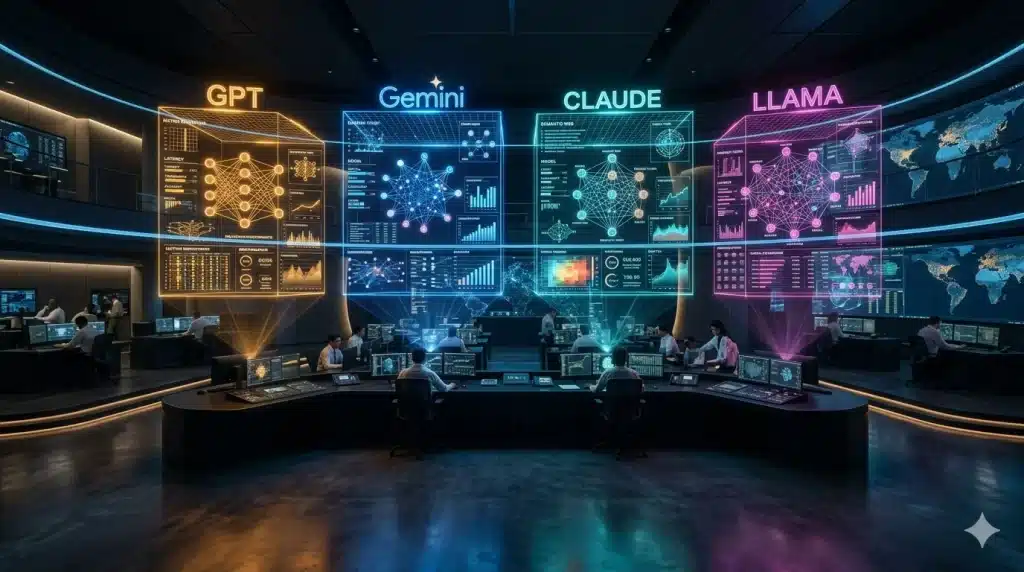
The market has bifurcated into “Flagship” reasoning models and “Budget” token factories. You must route your traffic according to the value of the task. If you are paying $30 per million tokens for a simple summarization, you are losing 98% of your margin.
| Provider | Model | Input / 1M | Output / 1M | Context |
| OpenAI | GPT-5.4 | $2.50 | $10.00 | 400K |
| OpenAI | GPT-5.4 nano | $0.05 | $0.40 | 128K |
| Anthropic | Claude Opus 4.6 | $5.00 | $25.00 | 1M |
| Anthropic | Claude Sonnet 4.6 | $3.00 | $15.00 | 1M |
| Gemini 3.1 Pro | $2.00 | $12.00 | 2M | |
| Gemini 2.0 Flash | $0.10 | $0.40 | 1M | |
| xAI | Grok 4 | $3.00 | $15.00 | 256K |
| DeepSeek | DeepSeek V3.2 | $0.28 | $0.42 | 128K |
| Mistral | Mistral Small 3.2 | $0.20 | $0.60 | 128K |
Here is the defining trend: Anthropic removed long-context surcharges up to 1 million tokens, while Google kept their 2-million-token window free on most tiers to buy market share.11 The cost is no longer the constraint. The constraint is the “governance debt” you accumulate every time you deploy an ungoverned agent.
The Q1 2026 releases have proven that the race for “IQ” is over, and the race for “Agency” has begun. We are moving toward a world where code is an abundant, disposable commodity and engineers are reorganized around the strategic orchestration of multi-agent workflows.32
But a final question remains for every leader: If your competitor’s agents can work for three days straight while yours still need a human to check every prompt, how long before the gap becomes unbridgeable?
Works cited
- Technical Performance | The 2026 AI Index Report | Stanford HAI, accessed May 4, 2026, https://hai.stanford.edu/ai-index/2026-ai-index-report/technical-performance
- What is Anthropic Claude 4.5 and What Makes It Different | MindStudio, accessed May 4, 2026, https://www.mindstudio.ai/blog/claude-4-1
- Sam Altman AI 2026: ChatGPT6 and OpenAI Predictions – The Tech Society, accessed May 4, 2026, https://digitalstrategy-ai.com/2026/01/02/openai-sam-altman-2026/
- LLM API Pricing 2026 — Compare GPT-5, Claude 4, Gemini 2.5, DeepSeek Costs | TLDL, accessed May 4, 2026, https://www.tldl.io/resources/llm-api-pricing-2026
- The Serious Insights State of AI 2026 April Update: How Power …, accessed May 4, 2026, https://www.seriousinsights.net/state-of-ai-2026-april-update/
- Sovereign AI: Building ecosystems for strategic resilience and impact – McKinsey, accessed May 4, 2026, https://www.mckinsey.com/industries/technology-media-and-telecommunications/our-insights/sovereign-ai-building-ecosystems-for-strategic-resilience-and-impact
- Llama 4 Complete Developer Guide (2026): Variants, Benchmarks …, accessed May 4, 2026, https://codersera.com/blog/llama-4-complete-guide-2026/
- AI Benchmarks 2026: Top Evaluations and Their Limits – Kili Technology, accessed May 4, 2026, https://kili-technology.com/blog/ai-benchmarks-guide-the-top-evaluations-in-2026-and-why-theyre-not-enough
- Is GPT-5 Still Good Enough in 2026? Complete Review – Chatly, accessed May 4, 2026, https://chatlyai.app/blog/what-gpt-5-got-right-or-missed
- 22 AI Frontier Models Compared for 2026 – TeamAI, accessed May 4, 2026, https://teamai.com/blog/large-language-models-llms/the-2026-ai-frontier-model-war/
- Top 5 LLMs for March 2026: Benchmarks & Picks – AlphaCorp AI, accessed May 4, 2026, https://alphacorp.ai/blog/top-5-llms-for-march-2026-benchmarks-pricing-picks
- Making Legacy Code AI-Ready: Benchmarks on Agentic Refactoring – CodeScene, accessed May 4, 2026, https://codescene.com/blog/making-legacy-code-ai-ready-benchmarks-on-agentic-refactoring
- OpenAI ChatGPT 2026: GPT-5 Features & GPT-6 Predictions – mindliftly, accessed May 4, 2026, https://mindliftly.com/openai-chatgpt-2026-gpt-5-features-gpt-6-predictions/
- LLM API Pricing Comparison 2026: Every Major Model, Ranked by Cost | BenchLM.ai, accessed May 4, 2026, https://benchlm.ai/blog/posts/llm-pricing-2026
- AI Models in 2026: Which One Should You Actually Use? – GuruSup, accessed May 4, 2026, https://gurusup.com/blog/ai-comparisons
- The latest AI news we announced in March 2026 – Google Blog, accessed May 4, 2026, https://blog.google/innovation-and-ai/technology/ai/google-ai-updates-march-2026/
- Gemini in 2026: Where it actually wins and where it honestly falls behind (with benchmarks) : r/GeminiAI – Reddit, accessed May 4, 2026, https://www.reddit.com/r/GeminiAI/comments/1s9lyty/gemini_in_2026_where_it_actually_wins_and_where/
- Google Gemini New Features 2026 — The Update That Quietly Changed Everything, accessed May 4, 2026, https://www.reddit.com/r/AISEOInsider/comments/1qvu1nk/google_gemini_new_features_2026_the_update_that/
- LLM API Pricing 2026: 20+ Models, Cost Per Token – PE Collective, accessed May 4, 2026, https://pecollective.com/blog/llm-api-pricing-comparison/
- GPU Cloud Benchmarks 2026: AI GPU Throughput, Specs, Pricing | Spheron Blog, accessed May 4, 2026, https://www.spheron.network/blog/gpu-cloud-benchmarks/
- 2026 GPU Selection Guide — From L40S to B300 – VESSL AI, accessed May 4, 2026, https://vessl.ai/en/blog/gpu-workload-guide-en
- Sovereign by Design: designing for security, compliance, and control in the AI cloud era | HPE, accessed May 4, 2026, https://www.hpe.com/us/en/newsroom/blog-post/2026/02/sovereign-by-design-designing-for-security-compliance-and-control-in-the-ai-cloud-era.html
- Data Protection Strategies for 2026: Zero Trust and AI Security – Hyperproof, accessed May 4, 2026, https://hyperproof.io/resource/data-protection-strategies-for-2026/
- The 2026 Privacy Leader’s Operating Playbook – TrustArc, accessed May 4, 2026, https://trustarc.com/resource/privacy-leaders-2026-playbook/
- AI Data Governance Framework For Secure AI Systems In 2026 | Protecto, accessed May 4, 2026, https://www.protecto.ai/blog/ai-data-governance-framework/
- Enterprise AI Agents: 2026 Strategy & Deployment Guide – Neontri, accessed May 4, 2026, https://neontri.com/blog/enterprise-ai-agents/
- Why AI Workflows Will Outperform AI Agents in 2026 – Medium, accessed May 4, 2026, https://medium.com/towards-agentic-ai/why-ai-workflows-will-outperform-ai-agents-in-2026-4c28e0d77000
- Refactoring at the speed of mission: An “agent mesh” approach to legacy system modernization with Red Hat AI, accessed May 4, 2026, https://www.redhat.com/en/blog/refactoring-speed-mission-agent-mesh-approach-legacy-system-modernization-red-hat-ai
- 2026 Agentic Coding Trends Report – Anthropic, accessed May 4, 2026, https://resources.anthropic.com/hubfs/2026%20Agentic%20Coding%20Trends%20Report.pdf
- Beyond Autocomplete: Best Agentic Coding Workflow in 2026 | Kilo, accessed May 4, 2026, https://kilo.ai/articles/beyond-autocomplete
- The Year Agentic Operations Got Real: 2025 Reflections and What 2026 Demands – xmpro, accessed May 4, 2026, https://xmpro.com/the-year-agentic-operations-got-real-2025-reflections-and-what-2026-demands/
Rethinking Software Engineering for Agentic AI Systems – arXiv, accessed May 4, 2026, https://arxiv.org/html/2604.10599v1